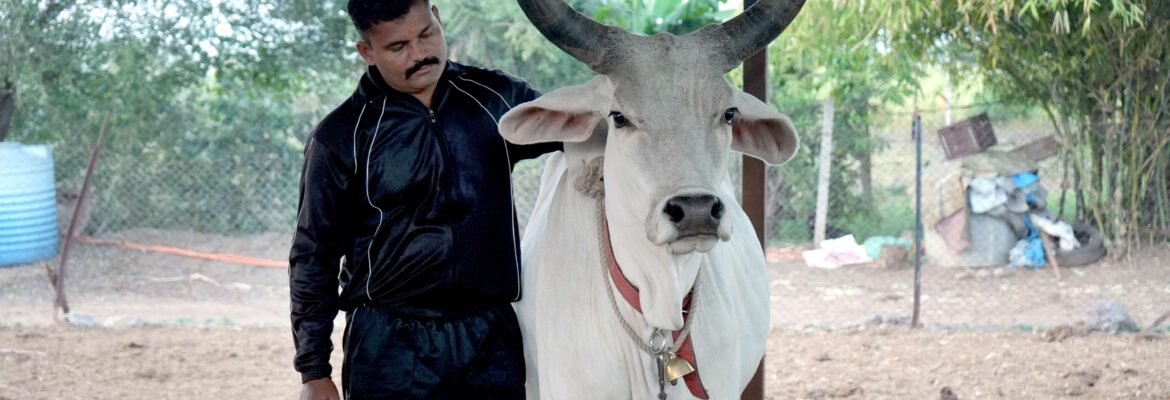
The concept of Gau Seva (service to the cow) in India is far more than a simple act of charity; it is a profound commitment rooted in religious reverence, constitutional mandates, and a deep-seated belief in the cow’s economic and ecological value.
This commitment manifests through stringent laws, dedicated government bodies, and a burgeoning network of cow shelters, especially evident in states like Maharashtra.
📜 Legislative and Constitutional Mandate
The sacred status of the cow is institutionalized through law, a commitment that flows directly from the Constitution of India:
Article 48 (Directive Principles): This article directs the state to “endeavour to organise agriculture and animal husbandry on modern and scientific lines and shall, in particular, take steps for preserving and improving the breeds, and prohibiting the slaughter, of cows and calves and other milch and draught cattle.”
State-Specific Laws (Maharashtra): The Maharashtra Animal Preservation Act, 1976 (amended in 2015), is one of the most comprehensive laws, enacting a complete ban on the slaughter of:
Cows (including heifers and calves).
Bulls and Bullocks.It also prohibits the sale, possession, and transport of their meat, significantly strengthening the legal framework for cow protection in the state.
🏛️ The Institutional Network: Maharashtra Goseva Ayog
To supervise and implement this commitment, dedicated state-level institutions have been established.
Maharashtra Goseva Ayog (MGA): Constituted to oversee the conservation, protection, and welfare of cattle in the state. Its core objectives go beyond prohibition to focus on a holistic approach:
Conservation of Indigenous Breeds: Promoting the development of local, indigenous cattle breeds.
Financial Strengthening: Suggesting measures to provide financial assistance and make Gaushalas (cow shelters) self-sufficient.
Scientific Integration: Coordinating with research institutes for breed improvement, fodder development, and industries based on cow-byproducts (dung, urine, and biogas), aligning the cultural commitment with modern scientific technology.
💚 Gaushalas: The Core of Gau Seva
Gaushalas—non-profit cow shelters—form the practical, operational core of Gau Seva. While traditionally maintained by religious or charitable trusts, they are increasingly integrated into the modern circular economy model.
Rescue and Rehabilitation: They provide refuge, medical care, and food for old, sick, abandoned, or seized cattle, ensuring their non-slaughter despite their reduced economic viability for milk.
Economic Hubs: Modern Gaushalas are transitioning into production centres.They leverage cow dung and urine to create valuable products:
Bio-Fertilizers/Pesticides: Essential inputs for organic and natural farming.
Biogas/CBG: Cow dung is a primary feedstock for biogas and Compressed Biogas (CBG) plants, supporting clean energy goals and generating revenue.
Panchagavya Products: Making value-added goods like soaps, incense sticks, and medicines from cow-byproducts.
This shift transforms the commitment from a purely religious/charitable burden into a sustainable, circular economic model that generates employment, reduces agricultural input costs, and contributes to clean energy, thus validating the sacred commitment with tangible social and environmental benefits.